Diwali 2026 falls on Sunday, November 8. Diwali, the Festival of Lights, is a five-day celebration observed by more than a billion Hindus, Sikhs, Jains, and Buddhists around the world. It celebrates the victory of light over darkness and good over evil. In 2026 the festival runs from Dhanteras on Friday, November 6, through Bhai Dooj on Tuesday, November 10. For families with young kids, the heart of Diwali is simple: clean and decorate the home, light diyas (small oil lamps), make rangoli, share sweets, and tell the stories behind the lights.
Let me tell you how this guide began. When I became a mom, I wanted my son to grow up loving Diwali the way I did as a little girl, with the lamps and the sweets and the stories my family told every year. So I went looking for toys and books that reflected our festival, something I could put in his hands, and I found almost nothing. That’s how Kulture Khazana was born. Since then I’ve had the joy of sharing Diwali with thousands of children, at the Smithsonian’s Diwali celebration, in corporate offices, libraries and classrooms, with my second child (a little girl), and on Good Morning America and CBS Mornings. Everything I’ve learned along the way, I’ve put here, so pour yourself a cup of chai and let’s get your family ready for the Festival of Lights.
Looking for everything Diwali in one place? Visit our complete Diwali 2026 family guide for the dates, how Diwali is celebrated across India, free printables, kits and where to buy them in the USA.
When is Diwali 2026? The five days at a glance
Diwali follows the Hindu lunar calendar, so the date moves every year. It falls on the new moon (Amavasya) of the month of Kartik, which is why the main night is the darkest of the month and the lamps matter so much.
| Day | Date (2026) | What it celebrates | A kid-friendly way to mark it |
|---|---|---|---|
| Dhanteras | Friday, Nov 6 | Goddess Lakshmi. Prosperity and health; the start of the festival | Help polish a small brass or steel item, or pick out one new thing for the home. Decorate the home and make Rangoli. |
| Choti Diwali (Naraka Chaturdashi, Kali Chaudas) | Saturday, Nov 7 | Lord Krishna’s victory over the demon Narakasura, in some states it is Kali Chaudas and honors Kali Ma | Make rangoli at the front door and set out diyas for tomorrow |
| Diwali / Lakshmi Puja | Sunday, Nov 8 | Goddess Lakshmi, Lord Rama’s homecoming, light over darkness | Light diyas at sunset, do a simple puja, share sweets |
| Govardhan Puja / Annakut | Monday, Nov 9 | Krishna lifting Govardhan Hill to protect his village. Gujarati New Year | Cook or help arrange a “mountain” of food to share |
| Bhai Dooj | Tuesday, Nov 10 | The bond between brothers and sisters, siblings. | Siblings and cousins make each other a card or small gift |
A note for families in the U.S.: some temples and families observe the main night based on local moon timings, so check with your local mandir or community. Many families also celebrate on the closest weekend, and that is completely fine. The spirit of the festival matters far more than the exact hour.
What is Diwali? How to explain it to a child
When I explain Diwali to a room full of five-year-olds, I start with the dark. I ask them to imagine the darkest night of the year, no moon at all, and then I ask what happens when one person lights one small lamp. Then another person lights one. Then the whole street. That picture, a dark night slowly filling with tiny flames, is Diwali. The word itself comes from the Sanskrit Deepavali, which means “a row of lamps.”
From there, the stories give the lights a reason:
- Rama comes home. In the Ramayana, Prince Rama, his wife Sita, and his brother Lakshmana return to the city of Ayodhya after fourteen years in exile and after defeating the ten-headed king Ravana. The people light lamps along every path so the family can find their way home in the dark. This is the story most children in North India grow up with, and it’s the easiest one to start with.
- Lakshmi visits. Families clean and decorate their homes and leave lamps burning to welcome Goddess Lakshmi, who brings prosperity, good fortune, and abundance.
- Krishna defeats Narakasura. In parts of South India, Diwali celebrates Lord Krishna’s victory over a demon who had imprisoned thousands of people.
- Bandi Chhor Divas. Sikhs celebrate the release of Guru Hargobind Ji from imprisonment, and the Golden Temple in Amritsar is lit up in his honor.
- Mahavira’s nirvana. Jains mark the day Lord Mahavira, the last Tirthankara, attained moksha.
Children don’t need every version on day one. I usually tell one story well, then mention that different families celebrate for different reasons, and that all of them share the same idea: light, goodness, and coming together.
Here’s an Audio story for you to share at bedtime
How to celebrate Diwali at home with kids
1. Clean and decorate together
Traditionally, families deep-clean before Diwali to welcome Lakshmi. Kids can own one small job, like their own shelf or the front step, and then help make the Jharokha, Lippan Art to hang on the walls. DIY Mirror Mosaic was created just for that.
2. Make rangoli
Rangoli is the colorful design made at the entrance of the home to welcome guests and good fortune. Traditional rangoli uses colored powder, rice, or flower petals. With toddlers, powder gets everywhere, which is why I created the Rangoli Mandala Floor Puzzle, a 32-inch circular puzzle that gives little ones the joy of building a rangoli without the cleanup. Older kids love the Rangoli Sand Art Kit or the Rangoli Foil Craft Kit.

3. Light diyas (safely)
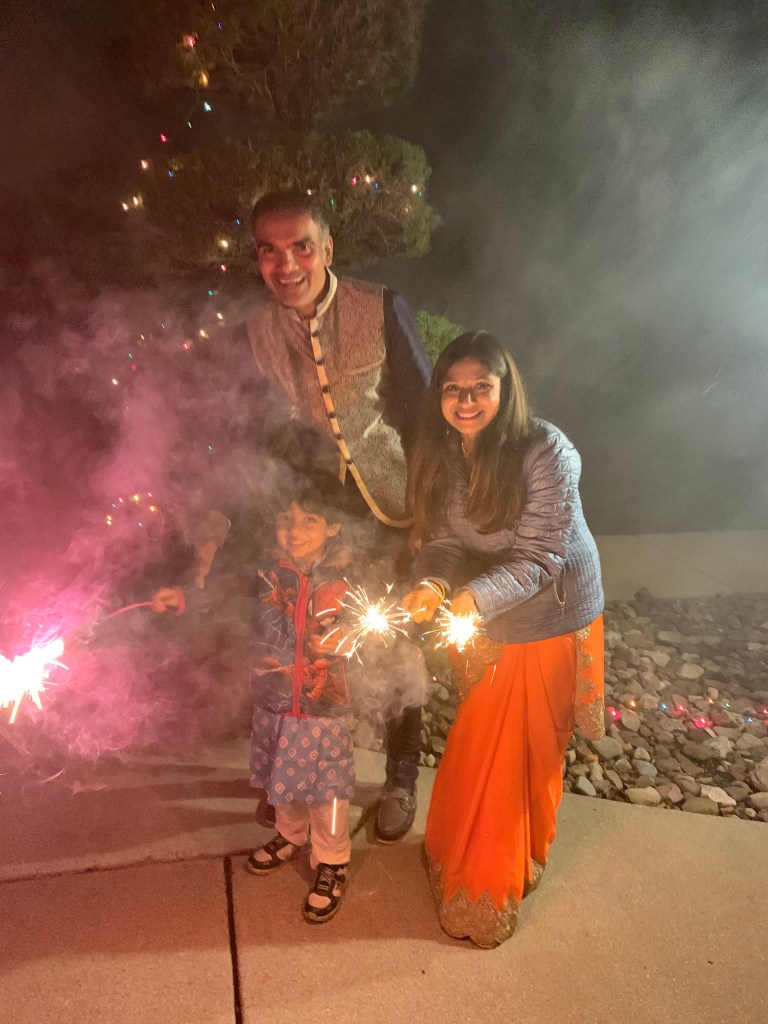
The diya is the symbol of the whole festival. For young children, I recommend LED diyas or letting them decorate clay diyas that an adult lights. Light them at sunset on the main night and talk about what “light” means in your family: kindness, learning, being brave. If available, light some small kid safe fireworks such as sparklers. That was the biggest highlight for me as a kid in India.
4. Do a simple puja
A puja doesn’t have to be long or formal. Many families light a lamp, offer flowers and sweets, ring a bell, and say a short prayer to Lakshmi and Ganesha. Our Puja Thali Kit for Kids lets children assemble and decorate their own prayer plate, so they’re participating rather than watching.

5. Share sweets and visit
Exchanging mithai (sweets) with neighbors, friends, and family is one of the most loved Diwali traditions. Let your child help pack a small box of treats for a neighbor and explain the festival in their own words. That one conversation does more for cultural pride than any worksheet.
6. Read and retell the stories
Read the Ramayana story at bedtime in the week leading up to Diwali, then let kids act it out with stuffed animals or paper puppets. For ages 6 to 12, the Mahabharata for Children is a beautiful next step into India’s epics.
Here’s an Audio story for you to share at bedtime
Diwali activities by age
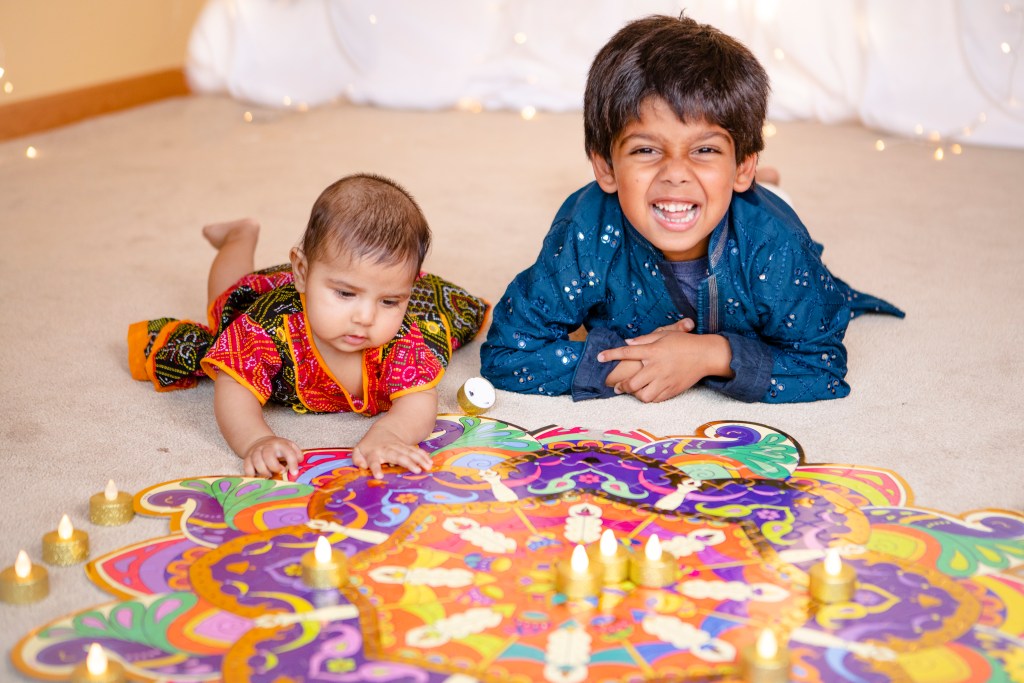
- Ages 2 to 4: Big-piece rangoli puzzles, coloring a free Rangoli Mandala coloring sheet, sorting colorful flowers for the puja, a Diwali-themed sensory bin.
- Ages 5 to 7: Sand art rangoli, making a toran, painting diyas, playing Diwali Bingo (free printable), acting out Rama’s homecoming.
- Ages 8 to 12: Mirror art inspired by Gujarat’s Lippan tradition, wooden rangoli coasters as gifts, helping cook a sweet, researching how Diwali is celebrated in different states of India.
Bringing Diwali to school
Many parents ask me how to share Diwali with their child’s class. I’ve written a full plan for that in How to Share the Joy of Diwali in the Classroom, and our Diwali Classroom Presentation is free to download. Teachers have told me that the moment a child gets to be the expert in front of their classmates is often the moment they start to feel proud of where they come from.
Where to find Diwali kits for kids
You can shop our full Diwali collection online, and starting October 11, for the very first time, you’ll find Kulture Khazana on shelves in Target stores. We’re also available on Amazon and at Nordstrom. If you’re celebrating Diwali for the first time, the Diwali Festival of Lights Kit brings together a rangoli puzzle, sand art, and a garland in one box.

Frequently asked questions about Diwali
When is Diwali in 2026?
The main day of Diwali in 2026 is Sunday, November 8. The five-day festival begins with Dhanteras on Friday, November 6, and ends with Bhai Dooj on Tuesday, November 10.
Why does the date of Diwali change every year?
Diwali is set by the Hindu lunisolar calendar. It falls on the new moon of the month of Kartik, which usually lands between mid-October and mid-November on the Western calendar.
What is the simplest way to explain Diwali to a child?
Diwali is the Festival of Lights. Families light little lamps called diyas to celebrate good winning over bad and light winning over darkness, and to welcome good luck into their homes. In the most famous story, people lit lamps so Prince Rama could find his way home.
Who celebrates Diwali?
Diwali is celebrated by Hindus, Sikhs, Jains, and some Buddhists, in India and across the South Asian diaspora, including millions of families in the United States. Many friends and neighbors from other backgrounds join in too.
Can families who aren’t South Asian celebrate Diwali?
Yes, and they’re warmly welcomed. Learning the stories, making rangoli, lighting a lamp, and sharing sweets with friends are respectful, joyful ways to take part. The key is to learn the meaning behind the traditions, not just the decorations.
Is it safe for young kids to light diyas?
Young children should always have an adult light and supervise real flames. LED diyas are a great alternative for toddlers, and kids can still decorate and place them.
Wishing your family a bright and happy Diwali. ~ Akruti, founder of Kulture Khazana