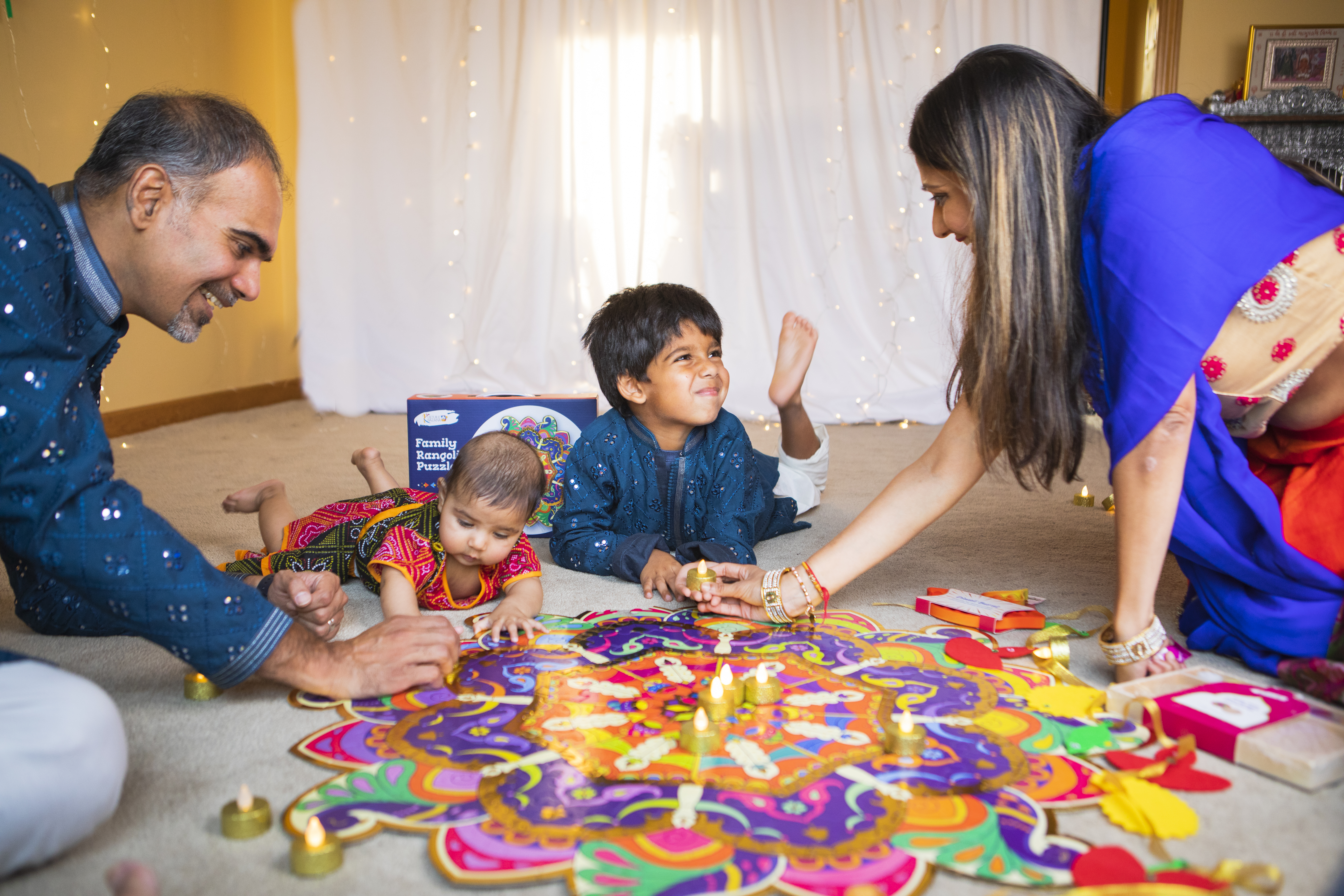
February 21 marks International Mother’s Language Day, a UNESCO-endorsed occasion dedicated to promoting awareness of linguistic and cultural diversity. This day has its roots in the Bangladeshi Language Movement, which honors the martyrs from East Pakistan (now modern-day Bangladesh). These brave individuals protested to preserve their mother language, Bangali, after the 1947 partition when East and West Pakistan (now Pakistan) were created. East Pakistan advocated for retaining Bengali as their official language instead of Urdu, which was spoken in West Pakistan.
In honor of International Mother’s Language Day, let’s explore ways to foster multilingualism at home and pay tribute not only to Bengali but also to our own mother tongues. Kids hear English all day long from school to sport and activities to chatting with neighbors and going to the store. It is not always easy or convenient (especially if you and your spouse share different native languages) to explore your native language with your kids but the rewards are endless. Linguists say that kids’ brains are like sponges and the best time to teach them another language is before the age of 10 for better long-term retention. Native languages bring us back to a place of home, comfort and pass along our traditions without much effort.
Make it a game
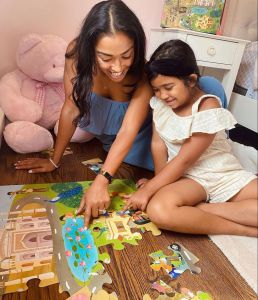
Children absorb language effortlessly through play. Incorporate your native language into classic games:
-
- I-Spy with a Twist: Require colors or shapes to be identified in Gujarati. For example, “I spy with my little eye something Lal.”
- Simone Says: Play this game with Bengali commands. For instance, “Simone says, ‘tomar matha sparsh karo’” (touch your head).
- Board Games: Introduce a rule that all counting during board games must be in Hindi: “ek, do, teen” (one, two, three).
Get cooking
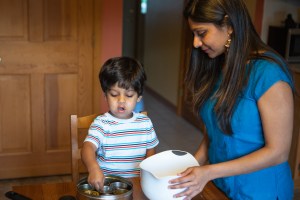
Next time you make a traditional dish involve the kids and give a cooking lesson in your native language with simple phrases, ingredient names and utensils. There are just some words and especially foods that don’t translate well like ‘Hing’ or “chhonk, tadka, vaghar”. Add in some extra culture lessons by talking about the orgin of the dish or share your memories of eating it as a child.
Listen to the music
They say music is the universal language that all can enjoy. It’s true but music can also open up a new language for your kids without them even realizing it. Exposure is half the battle with language so throwing on a play list of your favorite Telugu hits or the latest from Bollywood will have your kids singing along to foreign lyrics without a second thought. A multilingual album like Falu’s Bazaar by Falu is the perfect introduction for kids to Hindi and Gujarati. Falu masterfully composes kids’ friendly songs that seamlessly combine Hindi, Gujarati and English without missing a beat.
Rely your relatives
Encourage family members to greet your kids on the phone with their native language and see how long they can last before slipping into English. Challenge the grandparents to make it through breakfast with only speaking Tamil. Don’t be surprised when it’s the kids that have to remind the true native speakers not to use English. Your family and community are the authentic source for helping introduce and sustain your native language in your house. There is a sign of respect when the grandkid greets the grandparent in the native tongue, the kids are proud of themselves and to the grandparent nothing sounds better.
Get online support
The abundance of online language programs grows by the day. The programs are a great resource when your kids are sick of listening to us (it happens to everyone at some point). For the full gamut of India’s diverse languages check out Language Curry. From Odia to Sanskrit and Punjabi, the learning platform teaches ten languages found in India with an easy to navigate app. Another mainstream language learning platform is Duolingo with its friendly owl to engaged learners through Hindi lessons. With a recommended ten minutes a day of lessons, your mother’s language can easily be integrated into the daily routine.
Remember, native languages are more than just words; they carry stories, emotions, and connections to our roots. By incorporating them into our daily lives, we honor our heritage and enrich our children’s linguistic abilities.