Holi, often called the Festival of Colors, marks the arrival of spring and celebrates the triumph of good over evil. In 2026, Holi is celebrated on March 4, and families, schools, and communities across the U.S. are increasingly looking for ways to celebrate it in a safe, inclusive, and educational way.
As a parent and the founder of a cultural education brand, I know firsthand how important it is to find non-toxic, skin-safe Holi colors, especially for young children. I also know how powerful it can be when children see their culture reflected, or are introduced thoughtfully to someone else’s.
This guide is designed for parents, teachers, and schools who want to celebrate Holi with intention, creativity, and care.
What Are Holi Colors? (And Why Safety Matters)
In India, traditional dry Holi colors are called gulal, while wet colors are known as rang. Children often use pichkaris (water soakers) to mix gulal with water and spray color during play.
Historically, Holi colors were made from flowers, herbs, and plants. Today, however, many commercially available powders contain harsh chemicals that can irritate sensitive skin, eyes, and airways: especially for toddlers and elementary-age children.
If you’re celebrating Holi with kids, always look for:
-
Non-toxic, skin-safe ingredients
-
Colors that are safe for eyes and easy to wash out
-
Powders appropriate for schools and public spaces
Is Holi Appropriate for Classrooms? Yes, with the Right Approach
Holi can be a wonderful cultural learning opportunity in schools when it’s introduced thoughtfully.
Start by:
-
Talking to the teacher or school administrator about including a cultural lesson
-
Positioning Holi as a spring festival, not just color play
-
Emphasizing values like joy, renewal, kindness, and community
Many schools welcome Holi when it’s framed as part of global learning or multicultural education.
A Simple Way to Teach Holi in the Classroom
Together with Nisha from Love Laugh Mirch, we created a simple, age-appropriate Holi classroom presentation that teachers and parents can use to introduce:
-
Where Holi comes from
-
Why colors are used
-
How people celebrate around the world
This format works especially well for elementary classrooms, libraries, and cultural days.
Children’s Books That Help Explain Holi
Reading a story is one of the best ways to introduce Holi to children. Some educator-approved favorites include:
-
Let’s Celebrate Holi (from the Maya & Neil Collection)
-
Holi Hai! by Chitra Soundar
-
Festival of Colors by Surishtha Sehgal
Pairing a book with a discussion or activity helps children connect the celebration to real people and traditions, not just bright visuals.
Holi Activities for Schools (Even Without Color Powder)
If dry color play isn’t allowed at school, there are still many creative, mess-friendly ways to celebrate:
-
Tie-dye paper or shirts using safe dyes
-
Blow watercolor paint through straws to create “color bursts”
-
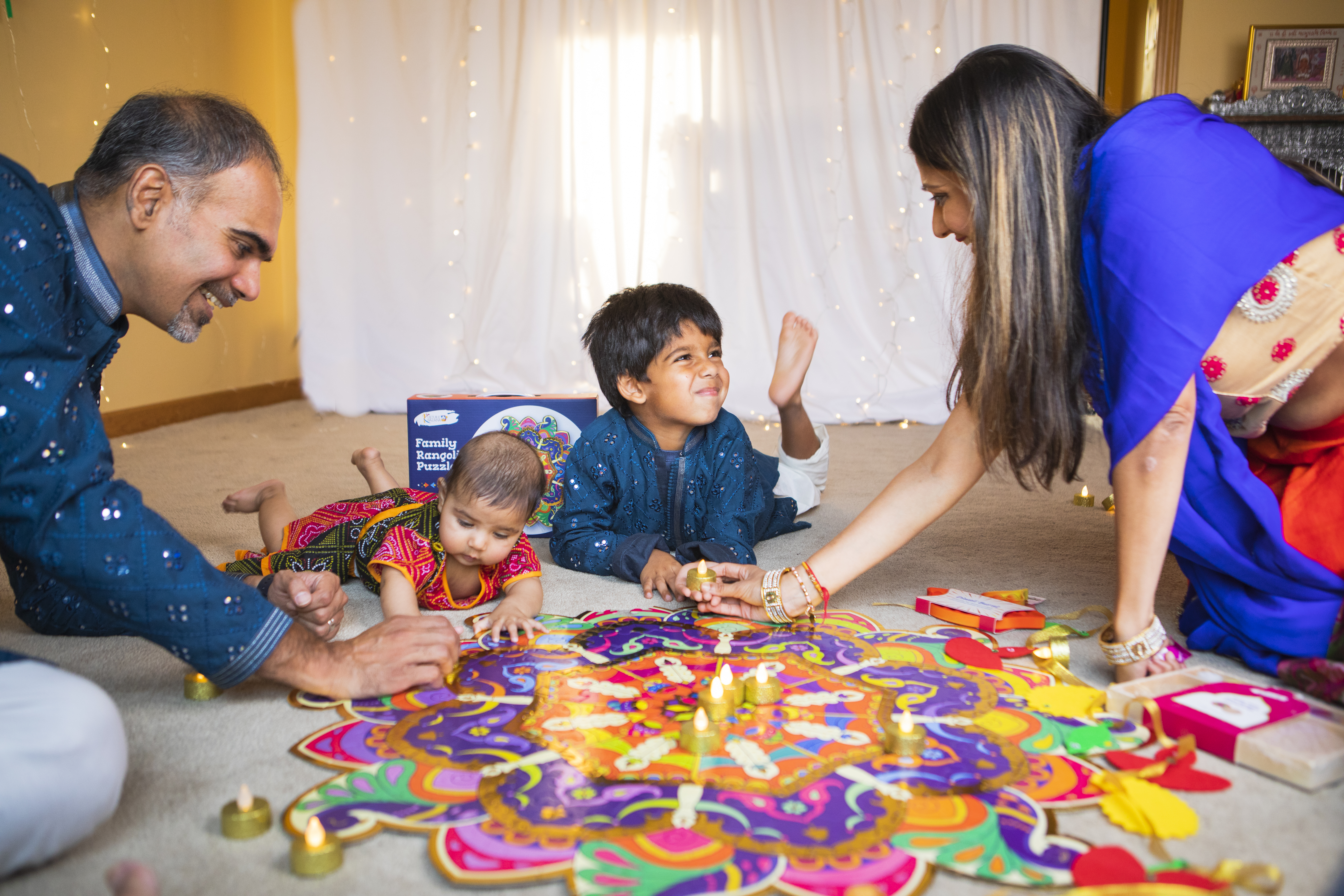
Making Rangoli Puzzle
-
Create a Holi Spring Tree with colorful tissue paper and blossoms
These activities keep the spirit of Holi alive while respecting school guidelines.
We have a perfect Holi Craft Kits for Classrooms
Sharing the Story Behind the Colors
At its heart, Holi is a story about resilience, hope, and joy. Children love understanding why people celebrate.
If you’re looking for a short, child-friendly explanation, our Story Auntie Holi story on Spotify is available as an audio experience designed especially for kids.
Why Teaching Holi Matters
When we teach children about celebrations like Holi, we’re doing more than planning a fun activity, we’re helping them:
-
Build cultural empathy
-
See diversity as something joyful
-
Feel proud of their own traditions
-
Learn that the world celebrates in many beautiful ways
Whether you’re a parent bringing Holi into your child’s classroom or an educator planning a spring cultural lesson, thoughtful celebrations leave a lasting impact.
Holi Hai!