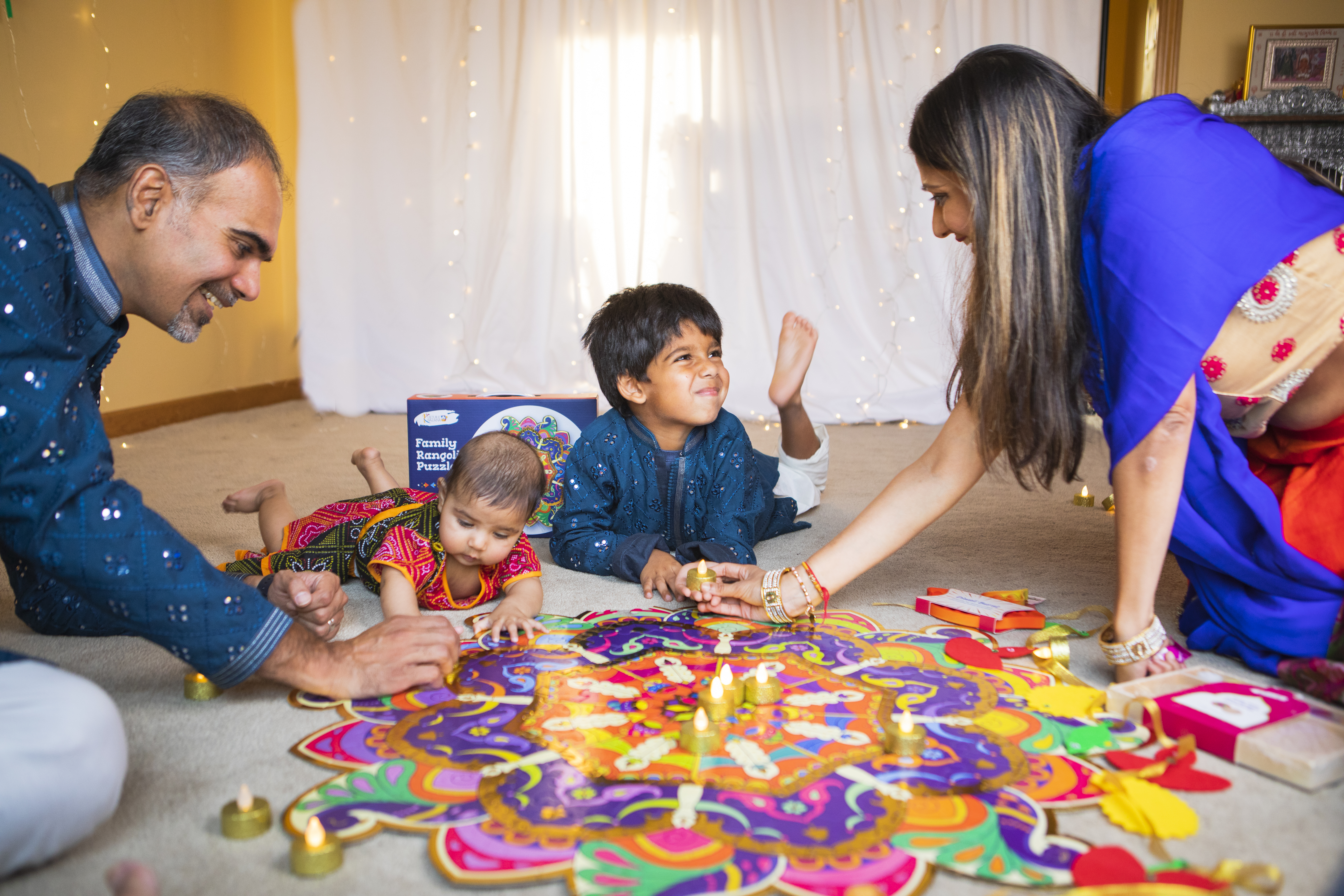
Winter in India brings with it a series of vibrant and joyous festivals that reflect the rich cultural heritage and agriculture of the country. There are four major festivals between January 13 and 15 – Lohri, Pongal, Makar Sankranti, and Uttarayan.
Let’s take a closer look at these celebrations, their significance, and how they are traditionally observed.
Lohri:
Lohri is predominantly celebrated by the Punjabi community to mark the end of winter and the arrival of longer days. It holds immense significance for farmers as Punjab is called the breadbasket of India and a major wheat growing region. Lohri is the time when crops start to flourish, farmers rejoice in their hard work and prepare to harvest them in a few months.
It is primarily observed in the northern regions of India, particularly in Punjab, Haryana, parts of Himachal Pradesh, and Delhi.
Families come together around a giant bonfire, sing traditional songs, play the Dhol, and dance Bhangra/Gidda. It is customary to offer sesame seeds, jaggery, and popcorn to the fire, symbolizing the essence of prosperity and abundance.
The traditional dish that’s enjoyed during this festival is Sarson ka Saag (mustard greens and spinach) and Makki Roti. Check out one of my personal favorite recipes by LoveLaughMirch on her blog for a delicious, authentic saag dish.
Pongal:
Pongal, also known as Thai Pongal, is a Tamil harvest festival that honors the Sun God. It marks the beginning of the auspicious Uttarayan period, when the sun moves northward. It is a 4 day festival with the first day dedicated to the Fire God, second day to the Sun God, third day for the cattle and the fourth day is for the birds.
It is mainly observed in the southern states of India, particularly Tamil Nadu, Andhra Pradesh, and Telangana.
The highlight of Pongal is the preparation of a special dish called ‘Pongal,’ a sweet rice pudding cooked in new clay pots. Since we don’t have clay pots accessible to us, here is a recipe from PipingPotCurry for Instant Pot Pongal.
Traditional kolam (a mathematical rangoli) designs are drawn, and cattle are adorned with flowers and turmeric, signifying gratitude towards them for their role in agriculture.
Makar Sankranti and Uttarayan:
Celebrated across India, Makar Sankranti and Uttarayan mark the transition of the Sun into the zodiac sign of Capricorn. ‘Makar’ means ‘Capricorn,’ and the movement of the sun into ‘Makar Raashi’ or the ‘Zodiac of Capricorn’ is called Makar Sankranti.It signifies the end of winter and the beginning of longer days. Days start getting warmer, and farmers prepare to harvest their crops.
Makar Sankranti has widespread celebrations across India, with regional variations in customs and traditions.
In Andhra Pradesh and Telangana, it is called Sankranti. In the regions along the Ganges, people take a bath in the holy river and donate “til”, and other goods.
Families prepare traditional sweets like sesame and jaggery ladoos, known as “Til Ladoo”. We love this easy Til Ladoo recipe by Ministry of Curry. This Pigeon Peas Curry recipe by MyVegetarianRoots is very popular in some regions of Gujarat.
In Maharashtra and Gujarat, the festival is known as ‘Uttarayan,’ and people indulge in kite-flying competitions, symbolizing the desire to reach new heights. The sound of “kai po che”, which is the Gujarati phrase often shouted during kite-flying competitions to cheer on participants and express victory, echoes through the air.
Traditional sweets like til chikki (sesame seed brittle) and undhiyu (a mixed vegetable dish) are prepared and shared.
These Indian winter festivals offer a wonderful opportunity for all parents to instill a sense of cultural pride and heritage in their children. By exploring the vibrant traditions of Lohri, Pongal, Makar Sankranti and Uttarayan, families can create lasting memories while fostering a deeper connection with their roots.